
UC San Diego Health is home to a nationally ranked neurosurgery and neurology program, recognized in the 2025–26 U.S. News & World Report "Best Hospitals" survey. The program also includes the region's only Level 4 Epilepsy Center and an NCI-designated Comprehensive Cancer Center, which is the highest possible rating for a U.S. cancer center. These recognitions reflect the breadth of expertise available to patients with complex neurological conditions.
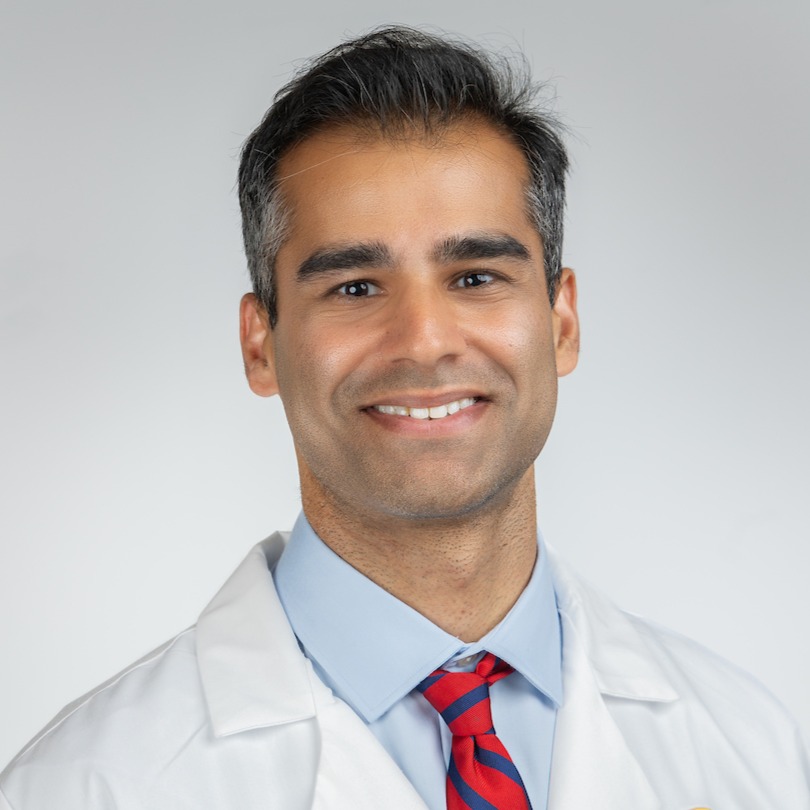
In this Q&A, Arjun Khanna, MD, assistant professor of neurological surgery at University of California San Diego School of Medicine and neurosurgeon at UC San Diego Health, shares what patients can expect when receiving neurosurgical care and provides an in-depth look at the program's expertise and advanced treatment options for conditions affecting the brain, spine, and peripheral nerves.
What makes neurosurgery at UC San Diego Health stand out?
One thing that sets us apart is the team approach. When you come to UC San Diego Health, you're not just seeing a single neurosurgeon, you're cared for by a team of specialists across neurosurgery, neurology, oncology, rehabilitation, nursing, and more. That collaboration means every patient's care plan is designed from multiple expert perspectives.
Our program also offers treatments and technologies that aren't available everywhere. This includes robotic-assisted surgery and advanced imaging during procedures, which help us operate more safely and accurately. As the region's only academic medical center, we also offer access to clinical trials, giving patients the opportunity to promising new therapies.
That foundation is reinforced by national designations: UC San Diego Health was the first in California to earn The Joint Commission's Advanced Certification in Spine Surgery, and our Parkinson's and movement disorders program is recognized as a Center of Excellence by the Parkinson's Foundation, the Lewy Body Dementia Association (LBDA), CurePSP, and the Huntington's Disease Society of America (HDSA).
Our national rankings validate the quality of our outcomes. But what really sets us apart is our personalized approach. We know that neurosurgery can be intimidating for patients, so our team makes sure every patient, and their family members, feel supported and informed at each step of their care.
What types of brain conditions do you treat?
We treat the full spectrum — from brain tumors, arteriovenous malformations (AVMs), and aneurysms to movement disorders like Parkinson's disease. Patients benefit from having access to multiple specialties under one roof, which streamlines care and reduces the need to travel between providers.
We also care for more patients with brain tumors than any other health system in San Diego, supported by our NCI-designated Comprehensive Cancer Center. Studies show outcomes are better at NCI-designated centers, which means our patients benefit from the highest level of coordinated cancer care.
One area I'm especially proud of is our expertise in advanced therapies, such as deep brain stimulation for movement disorders. Because our program is nationally recognized as a Center of Excellence for Parkinson's disease, multiple sclerosis, ALS, and multiple system atrophy, patients with these complex conditions have access to highly specialized care.
Our surgeons use precision navigation systems, intraoperative MRI, and continuous monitoring during surgery to improve safety and outcomes. These tools allow us to remove tumors more accurately or repair aneurysms more safely while protecting critical brain function.
Patients also benefit from our multidisciplinary tumor boards, where neurosurgeons, oncologists, and radiologists meet to review cases together. That kind of collaboration means patients receive care plans that are not just effective but truly tailored to their specific situation.
How does UC San Diego Health approach spine care?
Back and neck pain can be life changing. Our goal is to help patients get back to the activities they enjoy, whether that's returning to work, exercising, or simply living without constant discomfort.
We treat everything from herniated discs to complex deformities like scoliosis. Many conditions can be managed with minimally invasive surgery, which means smaller incisions, less pain, and faster recovery times. For more complex cases, we offer advanced procedures such as robotic-assisted spinal fusion and image-guided surgery that improve precision and outcomes.
What patients should know is that surgery is not always the first step. Every patient receives a personalized plan that may include physical therapy, pain management, or non-surgical treatments. If surgery is recommended, we will walk you through what to expect before, during, and after the procedure. We also provide coordinated rehabilitation, so recovery feels guided and supported.
What about peripheral nerve conditions?
Peripheral nerve disorders are often misunderstood, but they can have a major impact on daily life. We treat everything from nerve injuries and compressions to rare nerve tumors. Our focus is always on restoring function, whether that means regaining hand strength, improving mobility, or reducing chronic pain.
Patients at UC San Diego Health benefit from highly specialized expertise that isn't available everywhere. We use advanced diagnostic tools to pinpoint exactly where a nerve problem is occurring, and we design surgical plans that are as minimally invasive as possible. Because we work so closely with rehabilitation specialists, patients don't just have surgery, they have a full recovery plan aimed at improving quality of life.
What should patients expect during recovery from neurosurgery?
Recovery is unique for each patient. A straightforward procedure might mean going home the next day, while more complex surgeries can require longer hospital stays and rehabilitation. What's consistent is that we don't leave patients to figure it out on their own. From the moment someone schedules surgery, our team walks them through what recovery will look like and what support they'll have along the way.
Many patients benefit from physical or occupational therapy, and we make sure those services are integrated into the care plan. Families are also included in the process, so they know how to support their loved one during recovery.
When should someone consider seeing a neurosurgeon?
If you're living with persistent back or neck pain, sudden changes in movement or sensation, or if you've been diagnosed with a brain or nerve condition, it's worth seeing a neurosurgeon. Sometimes the reassurance of knowing what's going on — and having a clear plan forward — is just as important as the treatment itself.
The earlier we evaluate symptoms, the more options we usually have. Even if surgery isn't needed, we can connect patients with therapies that help. And if surgery is the right choice, you'll know you're in the hands of a team that does this every day, with nationally recognized expertise and advanced certifications to support the safest and most effective care possible.
Nationally Recognized Brain and Spine Care
Schedule a consultation with a board-certified neurosurgeon at UC San Diego Health to discuss your symptoms, receive a thorough evaluation, and explore personalized treatment options designed for your health.


